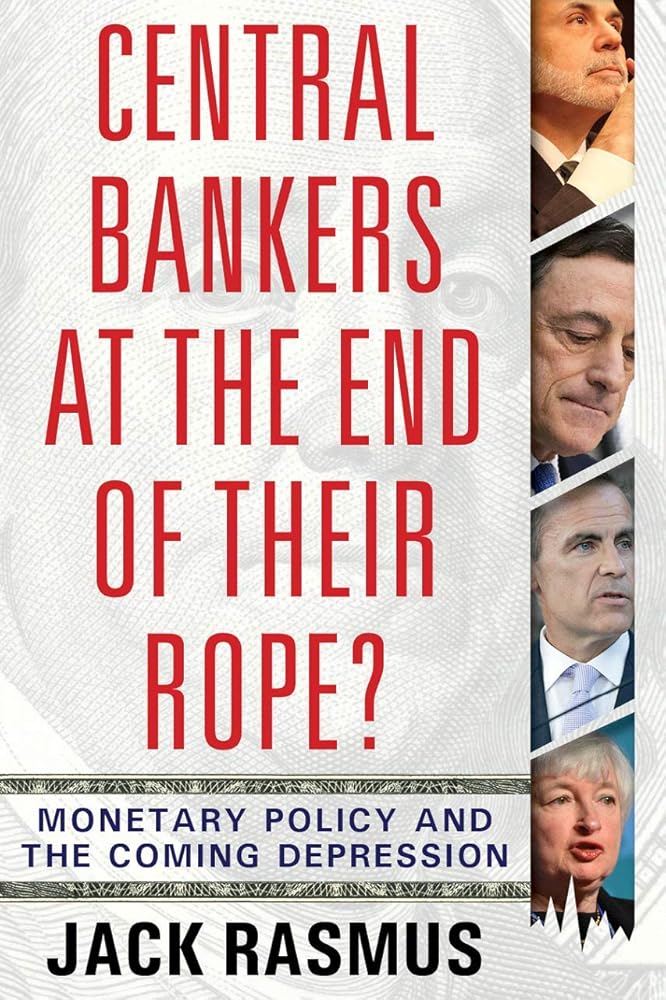
Central Bankers at the End of Their Rope?: Monetary Policy and the Coming Depression
Central Bankers at the End of Their Rope?: Monetary Policy and the Coming Depression
Couldn't load pickup availability
Central banks of the advanced economies—despite having been designated by theirrespective economic and political elites as their states’ primary economic policyinstitution—have failed since 2008 to permanentlstabilize the world’s banking systems orrestore pre-2008 economic growth. Rather, central bank liquidity injections since the 1970s not only produced the 2008-09crisis, but they then became the central banks’ solution to that crisis; and now promiseto cause of the next one, as a further tens of trillions of dollars of liquidity-enabled debthas since 2008 been piled on the original trillions before 2008. Fed policy since 2010 has represented an historically unprecedented subsidization ofthe financial system by the State, implemented via the institutional vehicle of the centralbank. Central banks’ function of lender of last resort, originally designed to provideexcess liquidity in instances of banking crises, has been transformed into thesubsidization of the private banking system, which today is addicted to, and increasinglydependent upon, significant continuing infusions of liquidity by central banks. Taking away this central bank artificial subsidization of the private sector, especially thefinancial side of the private sector, would almost certainly lead to a financial and realcollapse of the global economy.